
If you’ve ever stopped at a riverside, looked at the water flowing by, and wondered what’s inside, you’ve glimpsed the question behind water pollution. That term hides a complex reality, one where industrial waste, farms, people, and nature itself collide, and where our health, ecosystems, and future hang in the balance. In this article, I’ll walk you through the five causes of water pollution (yes, there are more nuances, but these five cover most of what’s hurting our waterways). By the end, you’ll see how each cause works, how they’re showing up today (2023–2025), and what you or your community can do about it.
What We Mean by Water Pollution?
Before diving into causes, let’s be clear about what water pollution really is. When we use that phrase, we mean any introduction of harmful substances, chemicals, microorganisms, plastics, heavy metals, or even excess nutrients, into water bodies such that they degrade water quality, harm ecosystems, or make water unsafe for human use.
It’s not always dramatic: sometimes pollution is invisible (like dissolved nitrates), sometimes it’s obvious (oil slicks, trash). But each pollutant contributes to making water less safe, less healthy, less life-supporting. Now, knowing that, let’s go deeper into the five major ways water gets polluted in the first place.
Cause 1: Industrial Discharge & Chemical Waste
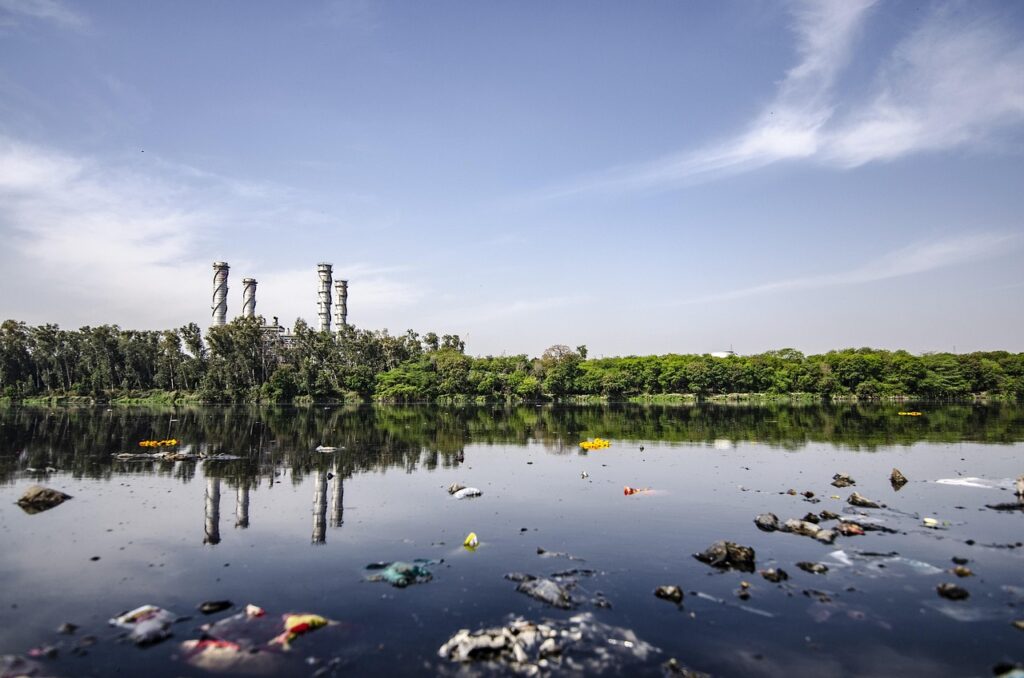
When factories churn, they often produce wastewater with chemicals, heavy metals, acids, dyes, solvents, or toxic byproducts. When that wastewater is dumped, treated poorly or not at all, into rivers, lakes, or coastal zones, you get a serious blow to water quality.
You might’ve heard about textile dyeing plants, battery factories, or chemical refineries releasing colored or foul water. In 2025, this is still a huge issue in many developing zones, where regulations are weak or enforcement is lax. These discharges introduce heavy metals like lead, cadmium, arsenic, or chromium. They also carry persistent organic pollutants (POPs) and industrial solvents that don’t easily break down.
Because these contaminants don’t disappear, they accumulate. Fish absorb them, sediments hold them, and eventually, they make their way into food chains or groundwater. That’s not just an environmental issue,it’s a health crisis.
Cause 2: Agricultural Runoff & Nutrient Pollution
You might’ve seen greenish, scummy patches in a pond or algae covering a stream. That’s often the work of excess nutrients, nitrogen, phosphorus, from fertilizers, manure, or soil erosion. That’s what we call nutrient pollution.
Here’s how it plays out: farmers apply fertilizers to boost crop yields. Rain, irrigation, or floods wash excess nutrients off fields into nearby water bodies. Those nutrients feed aquatic plants and algae. But too much growth means mass dieoffs, decomposition, oxygen depletion, and what’s called eutrophication. Fish suffocate; ecosystems collapse.
This cause is insidious because it’s diffuse (non-point source). There’s no single pipe you can clamp. It’s many patches of land contributing slowly but persistently. In recent research, nitrogen pollution has been linked to worsening water scarcity globally.
Also, consider livestock farms and feedlots, manure and waste leak into surface or groundwater. That multiplies nutrient loads plus pathogens. When you combine this with climate shifts (heavier rains, droughts), nutrient runoff intensifies. It’s not just an old-school problem; we’re seeing it worsen as land use intensifies.
Cause 3: Untreated Sewage & Domestic Waste
This is perhaps the most human, most relatable cause. We produce waste daily, bathwater, kitchen wastewater, toilet waste, and if our sewage systems are broken, overwhelmed, or nonexistent, that raw waste ends up in rivers, wells, or fields. Untreated or improperly treated sewage carries human pathogens (bacteria, viruses, parasites), nutrients, organic matter that consumes oxygen (raising biological oxygen demand), and pharmaceuticals or household chemicals.
In many parts of the world, sewage treatment infrastructure simply hasn’t kept pace with population growth or urbanization. The result? Rivers near cities become contaminated, groundwater becomes unsafe, and waterborne diseases rise. You might’ve noticed this if you live near growing cities where overflow drains discharge into rivers, or in places lacking good sewer systems. It’s a cause that’s partly technical and partly social rooted in infrastructure, urban planning, governance.
Cause 4: Plastic, Microplastics & Solid Waste
You’ve probably seen it: plastic bottles floating in rivers, bags tangled on branches, foam near the shore. That’s solid waste entering water systems. But in recent years, microplastics (tiny fragments, microfibers) have become a silent menace. Large plastic chunks degrade into smaller particles. Those microplastics are now ubiquitous in oceans, rivers, even drinking water. They carry chemical additives and can transport pollutants. Aquatic creatures ingest them, food chains get contaminated, human health becomes at stake.
Beyond plastics, other solid waste, industrial sludges, construction debris, household garbage, gets dumped near or in water bodies. That blocks waterways, creates breeding grounds for pests, leaches chemicals, and generally stresses ecosystems. The surprising part is how persistent this pollution is. Unlike organic waste, plastics don’t decompose quickly. They linger for decades, or more.
Cause 5: Groundwater Contamination & Leaching
Once an aquifer is contaminated, cleaning it is extremely hard, expensive, often impossible. People who rely on wells or boreholes end up with unsafe drinking water: chemicals, heavy metals, nitrates, pesticides.
Water pollution isn’t just surface water. Many crucial aquifers, underground water reserves, are threatened by leaching. Pollutants from landfills, chemical storage, agricultural fields, septic systems, and mining operations seep down through soil and fractures into groundwater. What makes this cause especially dangerous is invisibility. You rarely see the problem until someone tests the water, gets sick, or you see long-term trends. When you combine these five causes, you realize water pollution is rarely from just one factor, it’s a tapestry of stresses, some visible, some not..
How the Causes Interact
Let me share something most people miss: these causes don’t operate in isolation. They feed into each other.
- Industrial pollution adds heavy metals and chemicals and stresses systems that already have nutrient and pathogen loads.
- Sewage adds organic matter, boosting nutrient levels and feeding algal growth triggered by agricultural runoff.
- Plastic pollution degrades and releases chemicals, mingling with industrial and domestic waste.
- Groundwater contamination can come from any of the above, especially when surface waste percolates.
In many river basins or watersheds, you’ll see combined stress: industry upstream, farms midstream, towns downstream, leaking landfills nearby. That’s why solving water pollution must be holistic, not compartmentalized.
Effects & Real Stories You Might’ve Heard
These causes don’t stay in theory, they affect people, wildlife, economies. You might’ve heard of some:
- Dead fish lining river banks, that’s low dissolved oxygen from nutrient overgrowth and pollution stress.
- Algal blooms in lakes turning into green soup, that’s nutrient pollution in action.
- Communities forced to rely on bottled water or pay for expensive purification because local water got contaminated.
- In parts of South Asia or Africa, people still get cholera, dysentery, or other diseases because water is polluted by sewage and pathogens.
- In India, reports show that huge stretches of rivers are polluted due to industry, sewage, and waste mismanagement.
One recent example: a major river had foam so thick, locals avoided bathing, turns out, detergents and industrial chemicals were causing it. That’s the visible face of water pollution day by day.
What You (Yes, You) Can Do ??
It’s not all doom. While water pollution is a big problem, individuals, communities, and governments ALL have a role. Here’s where you can help, some steps small, some bigger:
- Support policies and local efforts for pollution control and sewage infrastructure.
- Reduce use of fertilizers, pesticides, and harmful household chemicals. Use organic or green alternatives where possible.
- Practice proper waste disposal, avoid dumping anything in drains or rivers. Recycle, segregate, reduce single-use plastics.
- Engage in community clean-ups or riverbank restoration efforts.
- Promote or adopt rainwater harvesting and buffer zones near water bodies to reduce runoff.
- Use water filters or treat your drinking water, especially in areas with uncertain water quality.
- Educate others, when your neighbor, school, or town understands these causes, change happens faster.
Each small act helps. Combined, they shift norms and systems.
Final Thoughts & Hope for Cleaner Water
The causes of water pollution are many, industrial discharge, agricultural runoff, sewage, plastics, groundwater leaching, but they’re not inevitable. As we’ve seen, these causes often intertwine, making pollution a complex beast. But human societies have solved tough problems before. We’ve got growing awareness, better water treatment tech, stronger regulations, and passionate communities. And you’re part of that change, just by reading, caring, sharing.

