Latest News & Updates

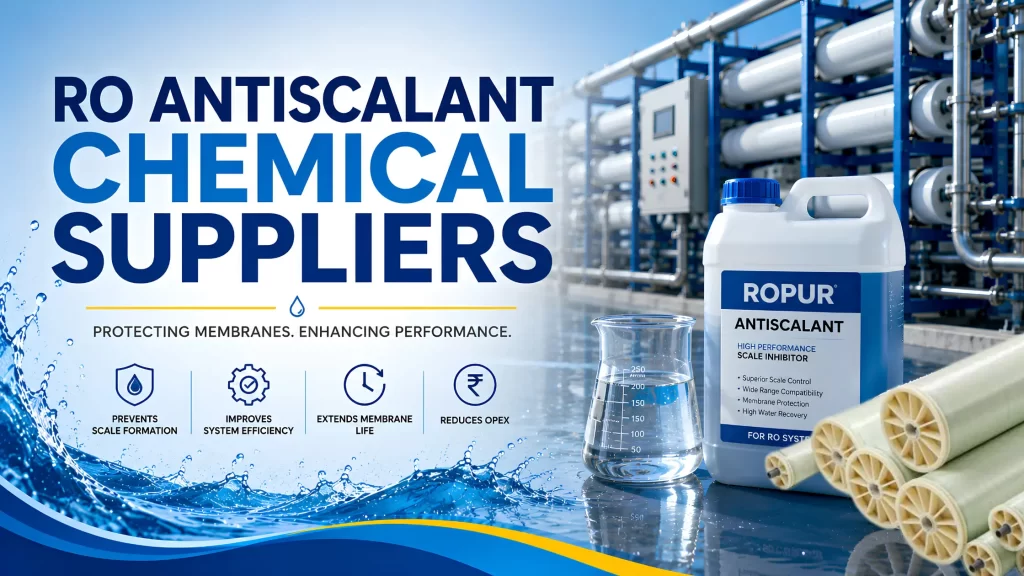
RO antiscalant Chemical Suppliers India

RO Antiscalant Chemical Suppliers in India | Premium Solutions

Your RO plant is running smoothly until scaling strikes. One day, you notice the pressure climbing, water output dropping, and suddenly you’re looking at expensive membrane cleaning cycles or premature replacements. Here’s the thing: this nightmare is entirely preventable with the right antiscalant chemical for RO plant systems. Scaling is one of the biggest operational […]

RO Antiscalant Chemical Suppliers in India | Premium Solutions Read More »
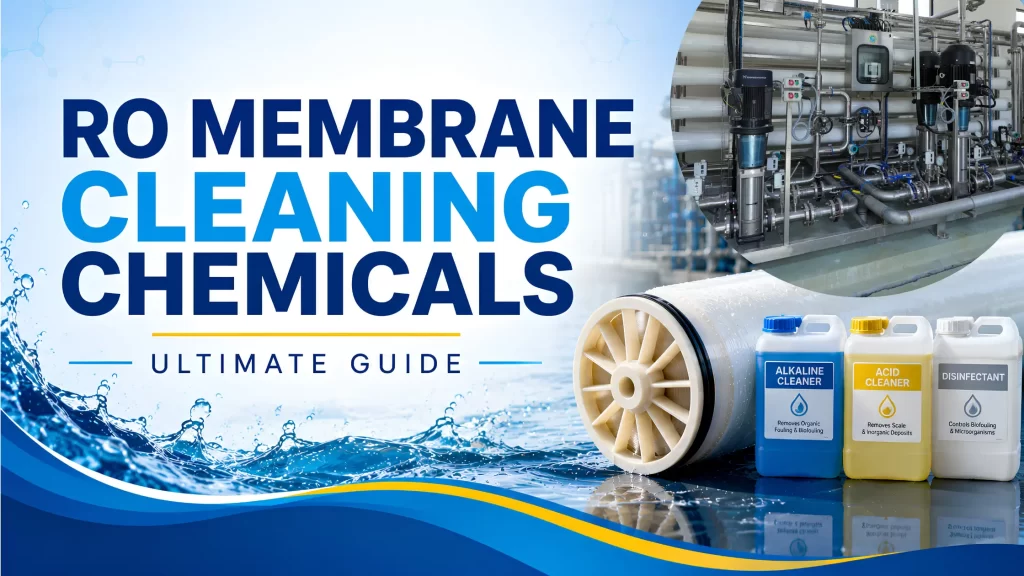
RO Membrane Cleaning Chemicals

Complete Guide to RO Membrane Cleaning Chemicals for Water Treatment

Your reverse osmosis (RO) system delivers pristine water until performance suddenly drops. Flow slows. Water quality dips. That’s when RO membrane cleaning chemicals become your best asset or your costliest mistake if chosen wrong.​ Membrane fouling isn’t just annoying; it’s expensive. The cost per membrane cleaning cycle varies based on system size, chemical selection, and

Complete Guide to RO Membrane Cleaning Chemicals for Water Treatment Read More »

RO vs UF Membranes

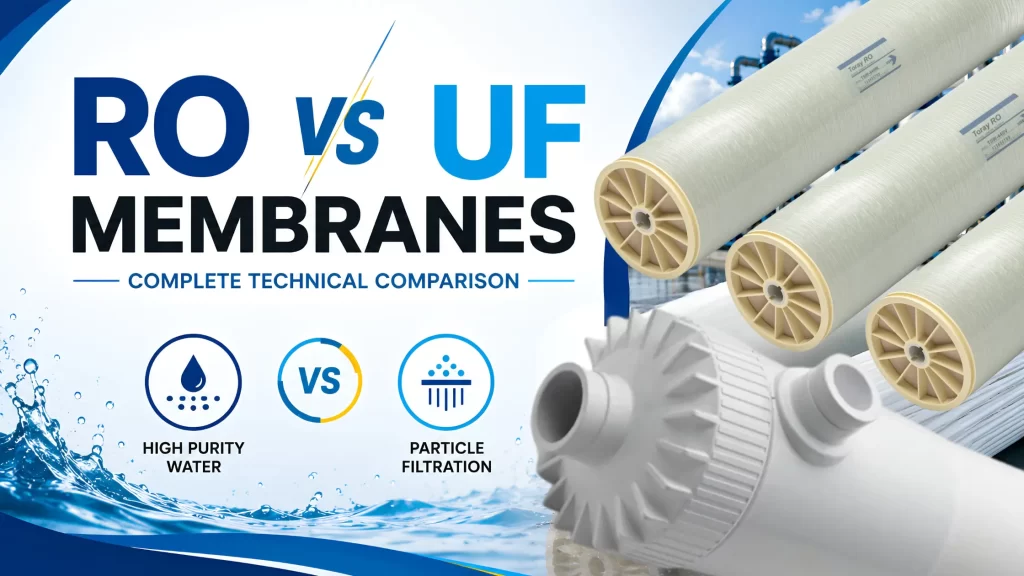
RO vs UF Membranes: Complete Technical Comparison

RO membranes have pore sizes of ~0.0001 µm and remove dissolved salts, heavy metals, and ions, best suited for desalination and high-purity water production. UF membranes have pore sizes of 0.01–0.1 µm and remove bacteria, viruses, and suspended solids while retaining minerals. For Indian industries, the right choice depends on your feedwater TDS, output purity

RO vs UF Membranes: Complete Technical Comparison Read More »

seawater membrane how it works, types, comparison buying guide

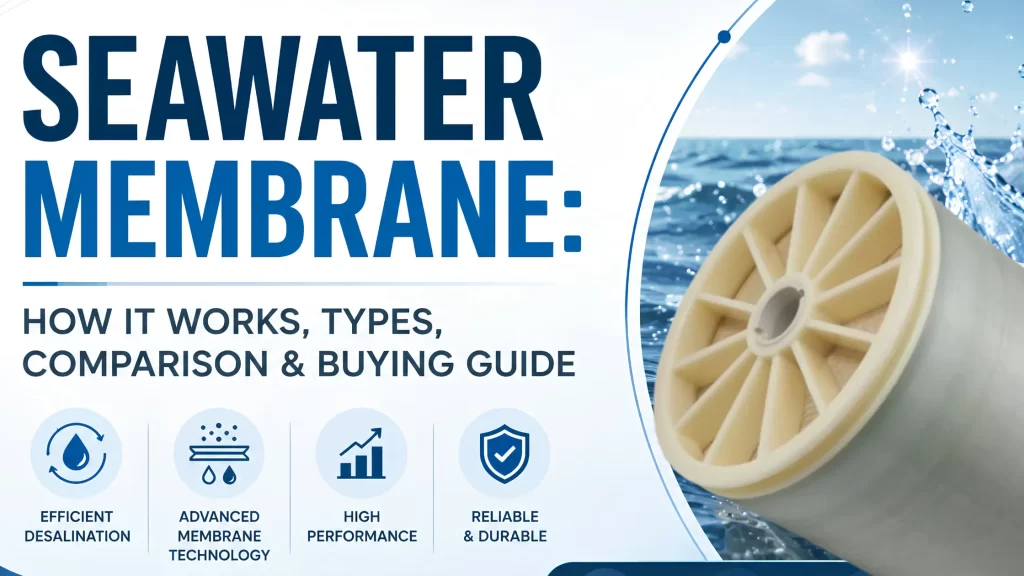
Seawater Membrane: How It Works, Types, Comparison & Buying Guide

India’s coastline stretches over 7,500 kilometres. It borders three seas and holds a near-unlimited source of water, most of which is too salty to drink, irrigate with, or use in industry. That gap between abundant seawater and usable freshwater is exactly what a seawater membrane solves. Modern seawater reverse osmosis (SWRO) technology has moved from

Seawater Membrane: How It Works, Types, Comparison & Buying Guide Read More »

TORAY Membrane Specification Guide for EPC Companies

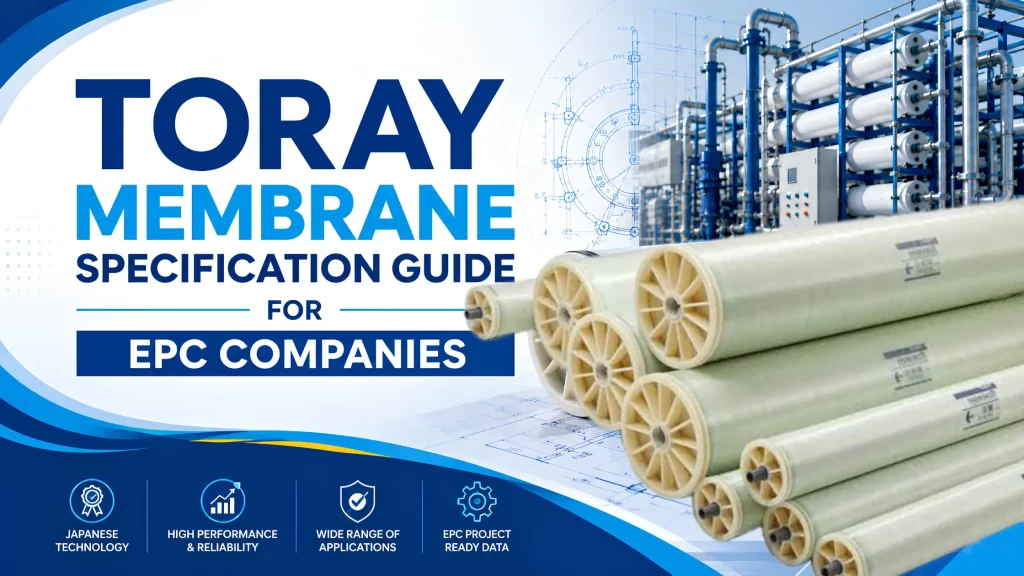
TORAY Membrane Specification Guide for EPC Companies

When you are building a water treatment system, one component makes or breaks everything: the membrane. For system integrators and EPC companies, getting the TORAY membrane specification right is not just about picking a product. It is about understanding the entire ecosystem of your water treatment solution, from feed water chemistry to pressure vessel arrays

TORAY Membrane Specification Guide for EPC Companies Read More »

PVA GEL for wastewater treatment

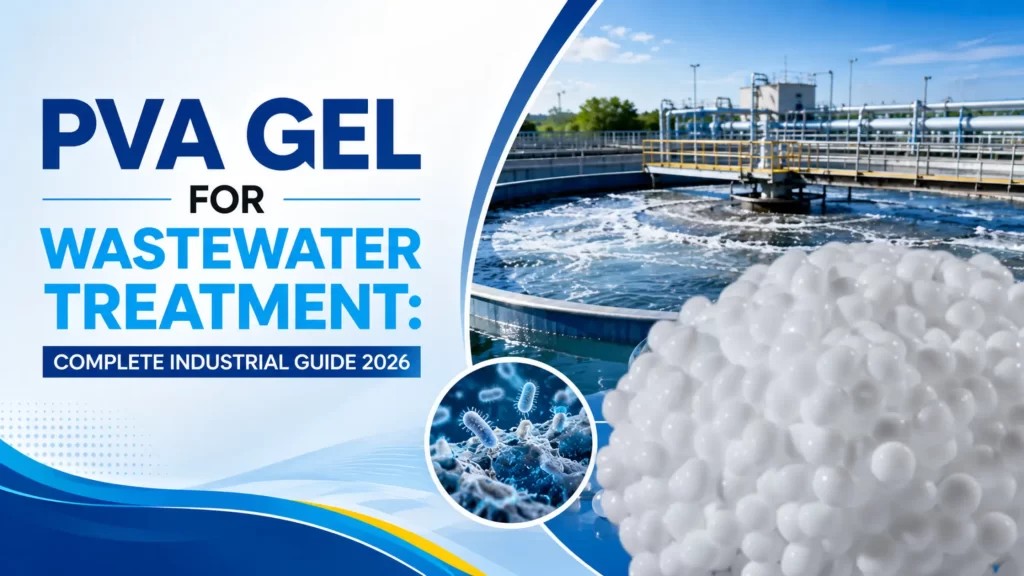
PVA Gel for Wastewater Treatment: Complete Industrial Guide 2026

Quick summary: PVA gel for wastewater treatment is a polyvinyl alcohol hydrogel biocarrier that immobilises bacteria inside 4mm porous beads. It delivers up to 92% COD removal, handles 2–5 times the BOD load of conventional activated sludge, and produces 80% less excess sludge. Developed by Kuraray (Japan), it is now widely used in STPs, ETPs,

PVA Gel for Wastewater Treatment: Complete Industrial Guide 2026 Read More »

antiscalant for ro plants

Best Antiscalant for RO Systems: Selection Guide, Dosing & Performance Data

The best antiscalant for an RO system depends on your feed water chemistry, the dominant scale type, and your target recovery rate. For most industrial brackish water plants, broad-spectrum phosphino-carboxylate blends like the ROPUR RPI antiscalant series handle CaCO₃, CaSO₄, BaSO₄, silica, and iron at just 2–5 ppm dosing. But picking the wrong product? That’s

Best Antiscalant for RO Systems: Selection Guide, Dosing & Performance Data Read More »

nanofiltration TDS reduction

Nanofiltration TDS Reduction: What Percentage Can NF Membranes Remove?

NF membranes remove between 30% and 93% of TDS, depending on membrane type, feedwater quality, and operating Pressure. For brackish water, a well-selected NF membrane typically delivers 43% to 88% TDS rejection.  For high-salinity or industrial streams, a tighter NF membrane under optimised conditions can push beyond 90%. That is the direct answer. But the

Nanofiltration TDS Reduction: What Percentage Can NF Membranes Remove? Read More »

Water Treatment Membranes Guide

Water Treatment Membranes: Types, Applications & How to Choose

Water treatment membranes are semi-permeable barriers that separate contaminants from water through pressure-driven filtration. The four primary types of microfiltration (MF), ultrafiltration (UF), nanofiltration (NF), and reverse osmosis (RO)filter particles ranging from 10 microns down to 0.0001 microns.  These membrane filtration systems are used across industries for water purification, wastewater recycling, and desalination. Introduction The

Water Treatment Membranes: Types, Applications & How to Choose Read More »

RO vs NF vs UF vs MBR Comparison matrix

RO vs. NF vs. UF vs. MBR: Complete Decision Matrix for Water Treatment Applications

If you’re designing or upgrading a water or wastewater plant today, your biggest headache is rarely “Do I need membranes?” It’s which ones to choose. RO, NF, UF, and MBR all promise better water quality, smaller footprint, and tighter compliance. But they do it in very different ways. Pick the wrong one, and you’ll be

RO vs. NF vs. UF vs. MBR: Complete Decision Matrix for Water Treatment Applications Read More »

Scroll to Top