
If you’re designing or upgrading a water or wastewater plant today, your biggest headache is rarely “Do I need membranes?” It’s which ones to choose.
RO, NF, UF, and MBR all promise better water quality, smaller footprint, and tighter compliance. But they do it in very different ways. Pick the wrong one, and you’ll be firefighting fouling problems, under-performance, and unexpected costs for years.
This guide gives you a practical, engineer-friendly decision matrix for RO vs. NF vs. UF vs. MBR so you can match the right membrane to your actual project, not just follow trends.
Quick Overview
Which membrane technology should I choose: RO, NF, UF, or MBR?
It depends on your feed water and effluent targets. RO removes dissolved salts and is used for desalination and high-purity water. NF softens water and removes colour/large organics at lower pressure. UF removes suspended solids, bacteria, and pathogens, ideal as pretreatment or for drinking water. MBR combines biological treatment with membrane filtration for compact, high-quality wastewater treatment. Most real plants use a combination of these technologies in a treatment train.
First, Get the Basics Right: What Each Technology Actually Does
Before you can use this decision matrix, you need a clear picture of what each technology is designed to remove and what it cannot.
Reverse Osmosis (RO): The High-Purity and Desalination Workhorse
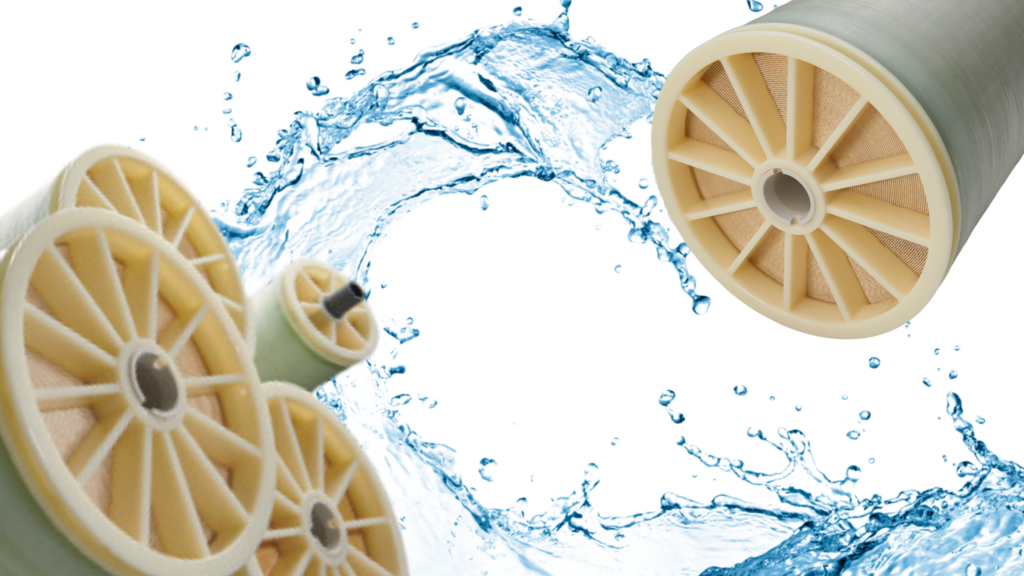
RO uses the tightest membranes in this group, with an effective pore size around 0.0001 microns. That’s small enough to reject most dissolved salts, heavy metals, and almost all microorganisms. Modern seawater RO membranes routinely achieve 99%+ salt rejection.
RO is what you choose when you need:
• High-purity water for boilers, pharma, or electronics manufacturing
• Desalination of brackish water or seawater
• Final polishing in industrial or municipal reuse schemes
• ZLD (Zero Liquid Discharge) compliance, where concentrate must be maximally reduced
Think of RO as your “maximum barrier” step for dissolved contaminants. It doesn’t discriminate; it blocks almost everything ionic.
Jay Water is India’s authorised Toray membrane distributor, supplying Toray RO membranes in 4-inch, 8-inch, and 16-inch diameters for brackish water, seawater, and high-purity industrial applications.
Nanofiltration (NF): Smart Softening and Colour Removal
Nanofiltration sits between RO and UF. NF membranes typically reject divalent ions, calcium, magnesium, and sulphates very effectively while allowing some monovalent ions like sodium and chloride to pass through. This selective rejection is what makes NF unique.
NF is your best choice when you want to:
• Soften water without full demineralisation
• Remove colour, large organic molecules, and dyes from surface or process water
• Partially desalinate moderately saline feed at a lower energy cost than RO
• Treat textile/dye effluent and recover reusable process water
• Reduce RO reject volume in ZLD plants by concentrating using NF first
NF often replaces traditional resin-based softeners in plants seeking to eliminate chemical regeneration cycles while retaining some useful minerals in the treated water.
Jay Water has installed 3,700+ Toray NF membranes in India. A documented case: an industrial effluent plant reduced its reject volume from 320 KLD to 110 KLD, well within its 120 KLD CETP discharge limit, by adding Toray NF membranes. Permeate quality improved to <50 ppm COD and <500 ppm TDS.
Ultrafiltration (UF): Turbidity and Pathogen Barrier
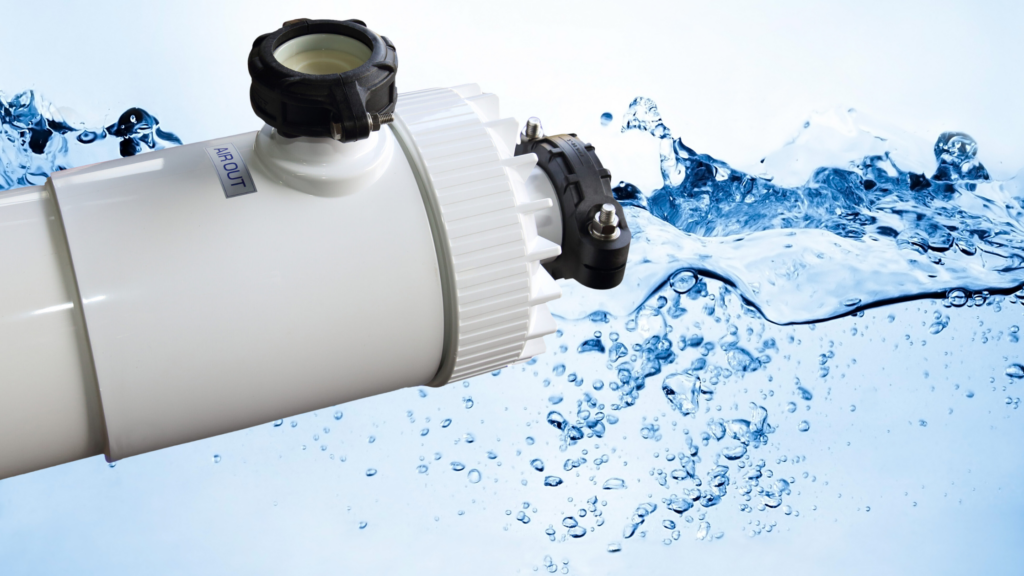
UF membranes work in the 0.01–0.1 micron range. They retain suspended solids, colloids, bacteria, and many viruses, but allow dissolved salts to pass through freely. UF is the workhorse of modern drinking water treatment and the most common pretreatment step for RO and NF systems.
UF is the right technology when you need to:
• Remove turbidity and pathogens from drinking water sources
• Protect downstream RO/NF membranes from fouling, significantly extending their lifespan
• Clarify process water in food, beverage, and power plants
• Replace conventional coagulation-flocculation-sand filtration with a more consistent barrier
• Build a Membrane Bioreactor (MBR). UF membranes are the separation component in most MBRs
Toray’s PVDF UF membranes, including the HFUG series (pressurised hollow fibre) and HSU submerged modules, deliver 99.99%+ virus removal, exceptional chemical resistance, and stable permeate quality even under variable feed water conditions.
Jay Water’s UF retrofitting project for Delhi Jal Board replaced 99 PES membranes with Toray UF at a 4.5 MLD plant, improving output while eliminating harsh chemical dosing.
Membrane Bioreactor (MBR): Biology + Membranes in One Compact Step
An MBR combines a biological reactor where microorganisms break down organics and nutrients with immersed UF or MF membranes that separate clean water from biomass and solids. The result is a system that handles both biological treatment and physical separation in a single, compact footprint.
MBR is usually your best option when you want:
• High-quality effluent from sewage or industrial wastewater with tight COD/BOD discharge limits
• A compact plant footprint. MBR allows far higher biomass concentration than conventional activated sludge
• Stable, low-turbidity, low-pathogen effluent that feeds directly into the downstream RO for reuse
• ZLD compliance in constrained urban or brownfield sites
Research on industrial and municipal MBR plants consistently shows COD removal above 90% and suspended solids removal exceeding 99%. The MBR effluent is an excellent RO feed. Studies confirm that MBR + RO systems achieve water recovery rates up to 90%, higher than conventional activated sludge + UF + RO systems at comparable energy consumption.
Jay Water supplies Toray MBR membranes for sewage and industrial effluent applications.
Master Comparison Table: RO vs. NF vs. UF vs. MBR
Use this table as your first-pass filter. Match your project parameters to the technology profile that fits best.
| Parameter | RO | NF | UF | MBR |
| Pore Size | ~0.0001 µm | 0.001–0.01 µm | 0.01–0.1 µm | 0.04 µm (UF membrane) |
| Operating Pressure | 15–80 bar | 3.5–30 bar | 1–7 bar | Low (vacuum / 0.2–0.5 bar TMP) |
| Salt / TDS Rejection | 95–99.5% | 60–95% (divalent) | Passes through | Depends on biology |
| Suspended Solids | Near 100% | Near 100% | Near 100% | Near 100% |
| Bacteria / Viruses | Near 100% | Very high | Bacteria 100%, viruses 99.99%+ | Near 100% |
| COD / BOD Removal | Limited | Partial (high MW) | Limited | >90% (biological) |
| Relative Energy Use | High | Medium-High | Low | Medium (aeration driven) |
| Relative CAPEX | Medium-High | Medium | Low-Medium | Medium (competitive at scale) |
| Typical Application | Desalination, pharma, boiler feed | Softening, dye removal, colour | Pretreatment, drinking water | Sewage, industrial WWT, reuse |
| ZLD Suitability | Core step | Concentrate polishing | Pretreatment only | Feed prep for RO in ZLD trains |
Key Decision Criteria: 6 Questions That Drive the Right Choice
In real projects, the choice between RO, NF, UF, and MBR comes down to six core questions. Work through these in order.
1. What Is Actually in Your Feed Water?
Start with a proper water analysis. At a minimum, you need TDS, hardness, turbidity, SDI (Silt Density Index), COD/BOD, pathogen data, and any specific ions or organics of concern. Without this, even the best decision matrix will mislead you.
Map your analysis to technology:
• High TDS / salinity → RO (sometimes preceded by NF) is essential
• High turbidity, low TDS, microbial risk → UF is your first line
• High COD/BOD, nutrients, variable organic load → MBR or biological step first
• High colour, divalent hardness, moderate TDS → NF is the efficient middle step
2. What Effluent Quality Do You Need?
Pin down exactly what “good water” means for your application. Are you targeting potable standards? Boiler or process water specs? Reuse for cooling, irrigation, or process? Tight discharge limits?
Technology-to-quality mapping:
• UF only: Good for turbidity and pathogen removal when TDS is already within the acceptable range
• NF: Soft, low-colour, low-hardness water but not ultra-low TDS
• RO: Must-hit low TDS, specific dissolved ion removal, or pharmaceutical-grade purity
• MBR → RO: High-quality reuse water from wastewater, including ZLD applications
3. Footprint and Site Constraints
Space is a real design constraint, especially in dense urban sites, brownfield industrial plants, and high-cost locations.
• UF and RO/NF skids can be containerised and stacked vertically
• MBR allows significantly higher biomass concentration than conventional activated sludge, meaning the biological reactor can be 3–5x smaller for the same load
• When the footprint is tight, the decision matrix almost always tilts toward MBR-based solutions over large clarifier + sand filter combinations
4. Operations, Fouling, and Team Capability
All membrane systems require careful operation and maintenance. The question is: what can your team realistically sustain long-term?
• UF: Simpler operation routine , backwashing and periodic CIP cleaning. Great starting point for most teams
• NF/RO: Requires strong pretreatment, SDI monitoring, antiscalant dosing, and good pressure management to prevent scaling and fouling
• MBR: Adds biological process control MLSS, SRT, and DO management on top of membrane operation
For NF and RO systems, antiscalant dosing is critical to prevent scaling and extend membrane life. Jay Water supplies ROPUR RPI Antiscalant, a field-proven solution for protecting RO and NF membranes from carbonate, sulphate, and silica scaling.
5. ZLD and Regulatory Compliance in India
India’s water discharge regulations have tightened significantly. NGT (National Green Tribunal) orders and CPCB (Central Pollution Control Board) norms increasingly mandate Zero Liquid Discharge, especially for textile, pharma, paper, and chemical industries. When you’re designing for today’s regulations, also ask: will this plant comply if norms tighten further?
ZLD technology mapping:
• Stage 1 Biological treatment: MBR (compact, stable effluent)
• Stage 2 Membrane concentration: NF (concentrate organics, reduce volume)
• Stage 3 Final RO: Near-zero liquid discharge, permeate reuse
• Stage 4 Thermal evaporation: MEE/MVR for final concentrate (minimal volume)
MBR and UF future-proof your plant. Both deliver stable, low-turbidity effluent that you can later polish with NF or RO as discharge norms evolve without rebuilding the entire system.
6. Membrane Fouling: The Hidden Operating Cost Driver
Fouling is the number-one reason membrane plants underperform. Understanding fouling types upfront nd designing pretreatment accordingly is non-negotiable.
Common fouling types:
• Colloidal fouling: Suspended particles blocking pores solved by UF pretreatment
• Biofouling: Bacterial growth on membrane surface managed by chlorination, UV, and CIP protocols
• Scaling (inorganic): Mineral deposition, especially calcium carbonate, sulphate, and silica. Requires antiscalant dosing and pH control before RO/NF
• Organic fouling: Humic substances, NOM managed by coagulation, activated carbon, or UF pretreatment
The most reliable plants design pretreatment first, then choose membranes. Skipping this step is the single most common reason for expensive membrane replacements, frequent CIP cycles, and premature plant failures.
Industry-Wise Application Guide: Which Technology for Which Sector?
Different industries face different water challenges. Here’s a sector-by-sector quick guide.
| Industry | Primary Challenge | Recommended Technology | Treatment Train | Jay Water Product |
| Textile / Dye | High COD, colour, and TDS in effluent | NF + RO or ZLD | ETP → NF → RO → MEE | Toray NF Membrane |
| Pharma / Electronics | Ultra-pure water, zero ionic contamination | RO (multi-pass) | UF → RO → Mixed Bed DI | Toray RO Membrane |
| Food & Beverage | Turbidity, pathogens, mineral control | UF or NF | Screens → UF → NF (optional) | Toray UF Membrane |
| Municipal Drinking Water | Pathogens, turbidity from surface water | UF | Coag/DAF → UF → Disinfection | Toray UF (HFUG / HSU series) |
| Sewage / Industrial WWT | High COD/BOD, nutrient removal, reuse | MBR → RO | Screening → MBR → RO | Toray MBR Membrane |
| Power / Boiler Feed | Low TDS, silica, and hardness | RO (preceded by UF) | UF → RO → Mixed Bed | Toray RO + UF |
| ZLD Plants | Zero discharge compliance (NGT/CPCB) | MBR + NF + RO + MEE | MBR → NF → RO → MEE/MVR | Full Toray membrane train |
How These Technologies Work Together in Real Plants
The most reliable water treatment plants don’t rely on a single technology. They build a treatment train where each membrane does what it does best. Here are the two most common configurations:
Surface Water and Groundwater Treatment Train
For drinking water or high-purity industrial water from surface or groundwater sources, the proven sequence is:
| Pre-screening → Coagulation / DAF → UF → RO or NF → Polishing (UV, Carbon) → DistributionUF protects NF/RO from turbidity spikes, reduces SDI, and stabilises performance, directly extending membrane life and reducing CIP frequency. This train consistently outperforms conventional coagulation-flocculation-sand filtration in both quality consistency and long-term operating cost. |
Wastewater Reuse and ZLD Treatment Train
For municipal sewage, industrial effluent, or ZLD compliance, the modern high-performance sequence is:
| Screening → Equalisation → MBR → NF (optional) → RO → UV Disinfection → Reuse / ZLDMBR replaces the clarifier and tertiary filtration in a single stage, delivering stable, low-turbidity, low-pathogen effluent that feeds directly into RO. Research confirms MBR+RO systems achieve up to 90% water recovery at energy consumption comparable to conventional UF+RO trains. |
Why Jay Water for Your Membrane Selection?
All of this is still theory until you map it to real products, proven field performance, and local technical support.
| Jay Water Field-Proven Track Record255,500+ RO membranes installed across India and globally3,700+ Toray NF membranes installed3,000+ satisfied customers across municipal, industrial, and commercial sectorsCase in point: Delhi Jal Board UF retrofitting 99 PES membranes replaced with Toray UF modules at a 4.5 MLD plant, improving output, water quality, and eliminating harsh chemical dosing during backwashing.₹300 Crore+ turnover | 25+ years in membrane water treatment | Authorised Toray Distributor in India |
As India’s authorised Toray distributor since 1999, Jay Water covers the full membrane portfolio: Toray RO, UF, NF, and MBR membranes, ROPUR RPI Antiscalant for scaling protection, and Kuraray PVA Gel for biological treatment enhancement. This means you get the right membrane for every stage of your treatment train from a single partner with 25+ years of field experience.
Explore Jay Water’s complete membrane range at products, review real-world installations at Jay Water case studies or speak directly with Jay Water’s engineering team for project-specific guidance on membrane selection, sizing, and cost.
A Practical Decision Snapshot: The Four Core Roles
If you need a quick mental model, think of each technology as having one primary role in the treatment train:
UF – Physical barrier against suspended solids, colloids, bacteria, and viruses. Best used as pretreatment to RO/NF or as a final step in low-TDS drinking water plants. Does not remove dissolved salts.
NF – Selective softening and organic/colour removal at lower energy and pressure than RO. Use when you need soft, clear water without stripping all minerals. Excellent for textile, F&B, and hard water treatment.
RO – Maximum dissolved contaminant rejection. Use when you must hit low TDS, remove specific dissolved ions, or reach pharmaceutical/boiler-grade purity. The core step in any desalination or ZLD system.
MBR – Compact, high-quality wastewater treatment that combines biological removal with membrane filtration. The right choice for sewage, industrial WWT, and any reuse application where footprint matters and effluent quality must be consistent.
The key insight: In most real projects, the smartest design is not “RO or MBR”, it’s a train where each technology handles what it does best. Coarse screening → MBR → RO → UV disinfection is a more robust and often more cost-effective answer than any single technology pushed beyond its design limits.
Conclusion: Turning the Matrix into a Real-World Design
Choosing between RO, NF, UF, and MBR is less about which technology is “best” and more about which combination is right for your specific job.
RO handles dissolved salts and ultra-high-purity needs. NF targets softening, colour, and selective ion removal. UF delivers a reliable barrier against turbidity and pathogens. MBR produces compact, consistent, reuse-ready effluent from wastewater streams.
When you apply this decision matrix properly, mapping feed water, effluent targets, footprint, operating capability, and regulatory requirements, you stop guessing and start building plants that run reliably from Day 1.
Your next step is straightforward: gather your water analysis, list your quality targets, and reach out to Jay Water’s engineers at support jay water. They’ll help you convert this matrix into a robust, future-ready membrane solution with project-level design guidance, accurate technology selection, and the field experience that only 25+ years of actual installations can provide.
FAQs
1. Which membrane technology is best for drinking water treatment: RO, NF, UF, or MBR?
It depends on your source water. If TDS is low and your main concerns are turbidity and pathogens, a well-designed UF system with downstream disinfection is often sufficient and cost-effective. If TDS is high or specific dissolved contaminants like fluoride, nitrate, or arsenic need to be removed, RO, typically after UF pretreatment, is required. MBR is primarily used for wastewater treatment, not as a direct drinking water source.
2. Can UF replace RO in an industrial plant?
No. UF and RO solve fundamentally different problems. UF excels at removing particles, colloids, and microorganisms, but it does not remove dissolved salts. If your challenge is hardness, high TDS, or specific dissolved contaminants, you still need RO or NF. In most industrial plants, UF is used before RO to protect it, not instead of it.
3. When should I choose NF instead of RO?
Choose NF when you need soft, clear water but don’t require ultra-low TDS. NF is ideal when you want to reduce hardness, colour, and large organics while preserving some useful minerals in the water and at a lower operating pressure and energy cost than RO. If your specifications demand near-complete dissolved salt removal, RO is the safer choice.
4. Is MBR always better than conventional activated sludge?
Not always. MBR typically delivers higher, more consistent effluent quality, better solids and pathogen removal in a smaller footprint. But it also requires biological process control, plus membrane operation and cleaning. For sites with ample land and simple discharge requirements, conventional activated sludge can still be an appropriate and lower-cost choice. For tight urban sites, reuse applications, or stringent discharge norms, MBR is almost always the better option.
5. What is ZLD, and which membrane combination achieves it?
ZLD (Zero Liquid Discharge) means no liquid effluent leaves the plant boundary; all water is either recovered for reuse or evaporated to dry solids. The most common membrane-based ZLD train is: MBR (biological + membrane filtration) → NF (concentrate and reduce volume) → RO (further polishing and water recovery) → MEE or MVR (thermal evaporation of final concentrate). Jay Water can help you design and supply the complete membrane train for ZLD compliance under India’s NGT and CPCB norms.
6. Can MBR be combined with RO or NF for water reuse?
Yes, this is one of the most effective combinations in advanced reuse and ZLD projects. MBR delivers low-turbidity, low-pathogen effluent that is an ideal RO feed. The combined MBR+RO train converts wastewater into high-quality water for cooling, irrigation, or process reuse, achieving water recovery rates up to 90% at energy consumption comparable to conventional treatment trains.
7. What is an antiscalant, and do I need it for RO or NF?
Antiscalant is a chemical dosed into the feed water before RO or NF membranes to prevent mineral scaling, particularly calcium carbonate, calcium sulphate, and silica. Scaling is one of the most common causes of premature membrane failure and elevated operating costs. For most RO and NF systems, antiscalant dosing is not optional; it’s essential for protecting your membrane investment. Jay Water supplies ROPUR RPI Antiscalant for this purpose.
8. How do I apply this decision matrix to my own plant?
Start with a comprehensive water or wastewater analysis. Map your feed water quality against the comparison table above. Shortlist one or two treatment trains and pressure-test them against your effluent targets, site constraints, and team capability. Then contact Jay Water through jaywater.com/contact/ their engineering team will refine the train for your specific site conditions, regulatory context, and budget, and help you select the right Toray membrane products for each stage.

