
When you are building a water treatment system, one component makes or breaks everything: the membrane.
For system integrators and EPC companies, getting the TORAY membrane specification right is not just about picking a product. It is about understanding the entire ecosystem of your water treatment solution, from feed water chemistry to pressure vessel arrays to long-term maintenance protocols.
Jay Water Management Pvt. Ltd. is India’s authorised TORAY membrane distributor, with over 255,500 TORAY membranes installed across industrial, municipal, and commercial projects. Our engineering team has worked on projects ranging from 50 KLD brackish water plants in Gujarat to multi-stage zero liquid discharge (ZLD) systems for textile ETP plants in Tirupur and pharma effluent treatment in Hyderabad. This guide draws directly from that field experience.
A poorly specified membrane turns a profitable project into a maintenance nightmare. You face unexpected fouling, higher energy costs, reduced uptime, and frustrated clients. When you nail the specifications? You deliver reliability, efficiency, and sustainable water treatment that clients depend on for years.
This guide walks you through everything: TORAY membrane series selection, technical specifications, sizing calculations, pre-treatment integration, fouling prevention, maintenance protocols, and India-specific application guidance. Whether you are integrating membranes into a 50 KLD industrial plant or designing a multi-stage ZLD system, this is your complete technical reference.
What Is a TORAY Membrane Specification Guide?
A TORAY membrane specification guide is your technical blueprint for selecting, sizing, and deploying reverse osmosis (RO), ultrafiltration (UF), nanofiltration (NF), and membrane bioreactor (MBR) systems. It defines the exact performance parameters, materials, configurations, and operating conditions your water treatment system needs to achieve.
For system integrators and EPC companies, this means having concrete answers to critical questions:
- Which membrane series handles your feed water quality?
- What diameter and configuration maximise efficiency for your flow target?
- How do you size pressure vessels to avoid bottlenecks?
- What pre-treatment sequence prevents fouling?
- How do you maintain membranes to maximise useful life?
TORAY Industries has manufactured membranes since 1968 and today offers a portfolio spanning low-pressure brackish water systems to ultra-high-pressure seawater desalination.
TORAY membranes treat over 25 million cubic metres of water per day globally, including installations at the world’s largest RO desalination plant, Rabigh 3 IWP in Saudi Arabia, which produces 600,000 m³/day. The specifications you choose determine recovery rates, salt rejection, energy consumption, and total cost of ownership over the membrane’s useful life.
Quick Overview: A TORAY membrane specification guide defines which membrane series, operating pressures, flux rates, and pre-treatment sequence to use for a given feed water quality and permeate target. It is the technical foundation for designing reliable, cost-efficient industrial water treatment systems.
Understanding TORAY Membrane Series: A Technical Overview
TORAY’s membrane portfolio divides into three primary categories based on feed water characteristics and application requirements. Here’s what system integrators need to know:
Brackish Water RO Membranes
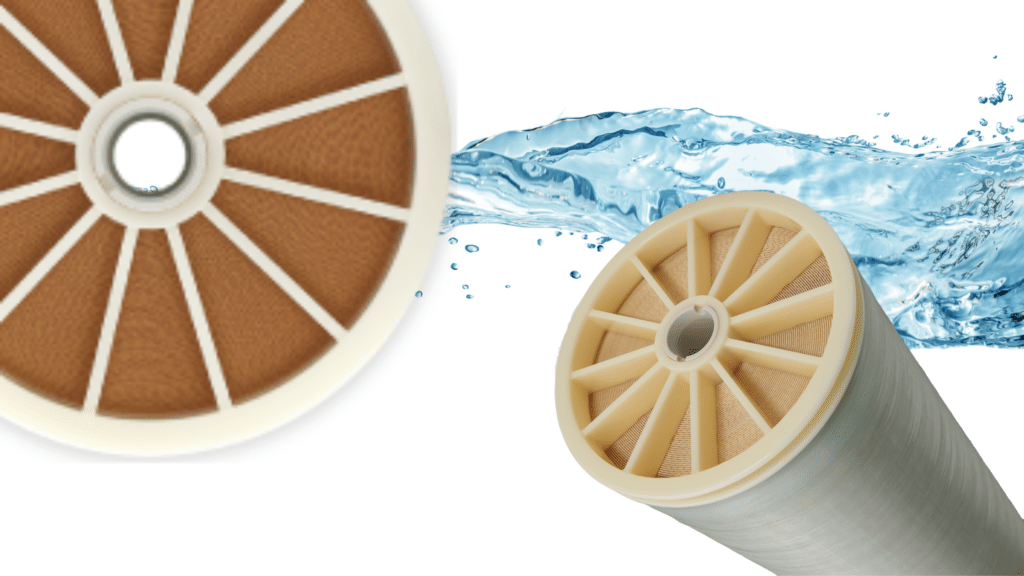
Brackish water applications, typically 1,000 to 10,000 ppm TDS (Total Dissolved Solids), represent the largest segment of industrial membrane demand. TORAY offers three distinct brackish water series designed for different operational scenarios.
TM700 Series (High Rejection)
Engineered for high-salinity brackish water with salt rejection rates reaching 99.8%. The TM710D (4-inch) delivers 2,600 GPD with 99.80% rejection, while the 8-inch TM720D-400 produces 11,000 GPD at 225 psi operating pressure. This series is ideal for industrial applications where permeate purity is critical and feed water TDS levels exceed 5,000 ppm.
TMG and TMH Series (Ultra-Low Pressure)
For lower-salinity brackish water under 3,000 ppm TDS, these ultra-low-pressure elements operate efficiently at 100 psi, reducing energy consumption significantly. The TMG10D delivers 2,650 GPD at just 100 psi with 99.7% rejection. This series is particularly valuable on cost-sensitive projects where energy efficiency directly impacts long-term economics.
TML Series (Low Fouling)
Designed specifically for challenging feedwater with high fouling potential, these membranes feature surface modifications that resist biofilm formation and organic scaling. They are the standard choice for wastewater reuse and industrial effluent treatment, where conventional membranes require constant maintenance and frequent chemical cleaning cycles.
Seawater and High-Salinity RO Membranes
Seawater systems above 10,000 ppm TDS demand membranes engineered for extreme osmotic pressures, typically 800 to 1,200 psi. These membranes require thicker polyamide layers and specific material chemistry to withstand high-pressure operation.
TM800 Series (Standard Seawater)
TORAY’s TM820M-400 delivers 7,000 GPD at 1,200 psi with 99.8% salt rejection, the workhorse for most seawater desalination plants. The 8-inch configuration provides the right balance between capacity and pressure vessel efficiency, reducing vessel count while maintaining reliable operation.
TM800V (Low Energy)
These membranes achieve 99.8% rejection while requiring less pressure than standard seawater elements, reducing energy consumption by up to 15–20% compared to conventional designs. For large desalination plants where energy is the dominant operational cost, this membrane family delivers significant lifecycle savings.
TSW-LE (Super Low Energy)
TORAY’s TSW-LE operates at just 600 psi, half the pressure of conventional seawater membranes, while maintaining competitive salt rejection. This technology is reshaping project economics on large desalination projects by dramatically reducing pressure equipment specifications and energy consumption.
For seawater membrane pricing and availability, explore Jay Water’s seawater membrane solutions.
Heat-Sanitised and Specialised Series
For pharmaceutical, food and beverage, and other applications requiring CIP (Clean-in-Place) compatibility and hot water sanitisation, TORAY offers the SU and SUL-G series. These membranes withstand temperature cycling and aggressive cleaning protocols essential in sterile processing environments.
TORAY Membrane Comparison: Series Selection at a Glance
Use this table to match your feed water to the correct TORAY series before beginning detailed sizing calculations.
| Membrane Series | Feed Water TDS | Operating Pressure | Salt Rejection | Best Application | Energy Rating |
| TMG / TMH (Ultra-Low Pressure) | 500–3,000 ppm | 50–100 psi | 99.7% | Low-salinity brackish, cost-sensitive | ★★★★★ |
| TM700D (High Rejection) | 3,000–10,000 ppm | 150–225 psi | 99.8% | Industrial high-purity water | ★★★☆☆ |
| TML (Low Fouling) | Variable, high fouling | 150–225 psi | 99.3–99.7% | Wastewater reuse, ETP, ZLD | ★★★★☆ |
| TM800 (Standard Seawater) | >10,000 ppm | 800–1,200 psi | 99.8% | Municipal desalination | ★★★☆☆ |
| TM800V (Low Energy SW) | >10,000 ppm | 700–1,000 psi | 99.8% | Large desalination, energy focus | ★★★★☆ |
| TSW-LE (Super Low Energy) | >10,000 ppm | 600–800 psi | 99.75% | Mega desalination projects | ★★★★★ |
| SU / SUL-G Series | Variable | Varies | 99%+ | Pharma, food & beverage, CIP-required | ★★★☆☆ |
Quick overview: To select the right TORAY membrane, match feed water TDS to series: under 3,000 ppm use TMG/TMH; 3,000–10,000 ppm use TM700D; wastewater/reuse applications use TML; seawater above 10,000 ppm use TM800, TM800V, or TSW-LE; pharma/food applications use SU series.
Technical Specifications You Need to Know
When specifying TORAY membranes for your system, these parameters drive every design decision.
Active Membrane Area
The active membrane area determines element output. A 4-inch spiral-wound element typically has 7–8 m² of active area, while an 8-inch element ranges from 37–41 m². Larger is not always better.
Oversized elements at undersized flow rates create unnecessary fouling risk and reduced pressure drop efficiency. Proper sizing ensures you operate within the optimal flux window for maximum performance and longevity.
Salt Rejection Rates and Permeate Quality
TORAY’s polyamide membranes maintain consistent rejection across product lines:
- Brackish water RO: 99.3% to 99.8% rejection
- Seawater RO: 99.8% to 99.86% rejection
Higher rejection means lower permeate TDS, but also requires higher operating pressure and produces slower permeate flow. System integrators must balance purity requirements against energy consumption and recovery targets.
Operating Pressure Parameters
Understanding pressure ranges prevents costly mistakes:
| Membrane Type | Operating Range | Max Design Pressure |
| Brackish Ultra-Low Pressure | 50–100 psi | 150 psi |
| Brackish Standard | 150–225 psi | 300 psi |
| Seawater Standard | 600–800 psi | 1,200 psi |
| Seawater High Pressure | 800–1,000 psi | 1,400 psi |
Exceeding design pressure degrades polyamide chemistry, accelerates membrane failure, and voids manufacturer warranties. Pressure regulation and monitoring are non-negotiable for protecting your capital investment.
Flux Rates and Recovery Rates
Design flux (measured in litres per square meter per hour, L/m².h) is one of the most misunderstood parameters. Higher flux increases throughput but dramatically increases fouling risk and reduces membrane life.
- Optimal flux for brackish water: 12–16 L/m².h
- Optimal flux for seawater: 8–12 L/m².h
For a deeper understanding of how flux affects system performance, read Jay Water’s RO Flux guide.
The recovery rate, the percentage of feed water converted to permeate, is constrained by feed water chemistry, pre-treatment quality, and operating pressure. Typical recovery rates:
- Brackish single-stage: 75–85%
- Brackish two-stage: 85–92%
- Seawater: 40–50%
Exceeding recommended recovery rates accelerates membrane fouling and scaling.
Silt Density Index (SDI) and Pre-treatment Requirements
All TORAY membranes require feed water SDI ≤ 5. This critical parameter measures particulate fouling potential and determines pre-treatment necessity. SDI exceeding 5 requires additional pre-treatment multimedia filtration, cartridge polishing, or ultrafiltration pre-treatment. Proper pre-treatment is the foundation of reliable membrane operation.
System Integration: Sizing and Design Calculations
Proper sizing prevents costly over-provisioning and undersized systems that breed fouling and operational problems.
Calculating Required Membrane Area
The fundamental equation for membrane system design:
Membrane Area (m²) = Permeate Flow Required (m³/day) ÷ Design Flux (L/m².h × 24 hours)
Worked Example: You need 50 m³/day permeate from brackish water at 15 L/m².h design flux:
Required Area = (50 m³/day × 1,000 L) ÷ (15 L/m².h × 24 hours) = 139 m²
With TORAY TM700 8-inch elements (40 m² each), you specify approximately 3.5 elements per pressure vessel. Round up to 4 elements to account for fouling margin and operational flexibility. This conservative approach prevents emergency membrane replacement during your warranty period.
For GPD-based calculations and how output varies with temperature and pressure, see Jay Water’s GPD in RO Membrane guide.
Pressure Vessel Configuration
Pressure vessels are arranged in arrays based on total membrane elements required, elements per vessel (typically 6 for 8-inch elements), and the number of stages needed. A typical configuration for 50 m³/day from 5,000 ppm TDS brackish water with 80% recovery:
- Stage 1: 90 elements (15 vessels)
- Stage 2: 45 elements (7 vessels, 50% recovery from Stage 1 reject)
- Stage 3 (optional): 10–15 elements for final polishing
This staged array improves recovery while maintaining pressure drop within acceptable limits, ensuring each stage operates efficiently without exceeding equipment pressure ratings.
Pre-treatment Integration
EPC companies consistently underestimate pre-treatment’s importance. Inadequate pre-treatment creates a false economy: you save money upfront, then spend it on accelerated membrane replacement and excessive chemical cleaning.
Essential pre-treatment components:
Multimedia Filtration (MMF): Removes suspended solids and reduces SDI from raw water levels (often 10–20) to approximately 4–5. First line of defence against particulate fouling.
Activated Carbon Filtration (ACF): Removes chlorine critical because chlorine directly attacks polyamide membranes, causing permanent damage at concentrations as low as 0.1 ppm.
Cartridge Polishing (5 micron): Achieves final SDI ≤ 3 before membrane feed.
Optional Ultrafiltration (UF): For challenging feed water with high turbidity or seasonal algal blooms, TORAY’s UF membranes achieve sub-micron filtration and reduce downstream membrane fouling by 40–60%. The HFUG series (hollow fibre, 0.01 µm nominal pore size) and TM-UF8040-FA spiral wound modules are the most commonly specified for RO pre-treatment. Read the complete TORAY UF membranes guide for pre-treatment design details.
TORAY Membranes for Indian Industries: Application-Specific Guidance
India’s industrial water treatment landscape has unique characteristics, variable feed water quality, CPCB ZLD compliance requirements, and sector-specific challenges. Here is how the TORAY membrane selection maps to India’s key industries.
Textile Industry (Gujarat, Tirupur, Surat)
Textile dyeing effluent is among the most challenging feed water globally, with high TDS (often 15,000–25,000 ppm), intense colour, residual dyes, and high COD. CPCB mandates ZLD for textile units above threshold discharge volumes.
Recommended specification approach:
- Primary treatment: DAF + MBR for COD/BOD reduction
- Primary RO: TML low-fouling series colour and organic loading make conventional membranes impractical
- Secondary RO: TM700D series for further TDS reduction
- Tertiary: TORAY NF membranes for concentrate polishing and colour removal
For colour removal and dye-specific NF applications, see Jay Water’s TORAY NF nanofiltration membrane guide.
Pharmaceutical Industry (Hyderabad, Ahmedabad, Pune)
Pharmaceutical water treatment requires the highest permeate purity and compliance with WHO, USP, and Indian Pharmacopoeia standards. Membranes must support validated cleaning protocols.
Recommended specification approach:
- Feed water: Treated municipal or well water, typically 500–2,000 ppm TDS
- Primary RO: SU or SUL-G series for CIP compatibility and hot water sanitisation
- Second-pass RO: SU-series for ultra-pure water production
- Ultrafiltration pre-treatment: TORAY HFUG hollow-fibre modules for bacteria and endotoxin removal
Power Generation (Thermal Plants, Industrial Utilities)
Boiler feed water and cooling tower makeup water require low TDS and controlled silica levels. Large-capacity systems demand high recovery to minimise reject water volumes.
Recommended specification approach:
- Feed water: River, well, or municipal water, 500–5,000 ppm TDS
- Primary RO: TM700D series for high rejection
- Recovery target: 85–92% with two-stage configuration
- Silica management: Antiscalant dosing is critical. Silica scaling is the dominant failure mode in power sector RO systems.
Food and Beverage Industry
F&B applications require NSF-certified membranes, CIP compatibility, and consistent permeate quality for product safety.
Recommended specification approach:
- Feed water: Municipal water or well water, typically under 2,000 ppm TDS
- Primary RO: TMG or TMH series (ultra-low pressure) for energy efficiency
- NF applications: TORAY NF for sugar concentration, partial softening, and organic removal
For NF-specific benefits in F&B and industrial COD/TDS reduction, see Jay Water’s nanofiltration membrane for COD-TDS guide.
Fouling Prevention and Maintenance Protocols
Fouling is the primary cause of premature membrane failure. Understanding TORAY’s maintenance protocols separates successful integrators from operators managing chronic performance problems. Proactive maintenance extends membrane life by 2–3 years compared to reactive strategies.
Common Fouling Mechanisms
Biofouling: Bacteria form biofilm layers on membrane surfaces. Symptoms: gradual increase in pressure with stable flow for 2–4 weeks, followed by sudden performance collapse.
Scaling: Calcium carbonate, strontium sulfate, and silica precipitate on membrane surfaces. Symptoms: pressure increases disproportionately while flux drops, with fouling concentrated on final elements where concentration is highest.
Organic Fouling: Humic substances, proteins, and hydrocarbons adsorb onto membrane surfaces, reducing salt rejection and increasing differential pressure. This typically occurs when pre-treatment is inadequate for the water source.
TORAY Maintenance Cleaning (TMC) Protocol
Rather than waiting for traditional recovery cleaning, which involves aggressive chemicals and longer soak times, TORAY recommends Maintenance Cleaning (TMC), a preventative approach using milder chemical concentrations applied more frequently. This philosophy maintains membrane performance within the stable operating zone, preventing severe fouling accumulation.
TMC Protocol:
- Frequency: Daily or every 2–3 days, depending on feed water quality
- Soak time: 20–30 minutes
- Chemical concentration: 50% of recovery cleaning strength
- pH range: Optimal 4–10 (gentle), acceptable 2–12 (harsher cases)
This approach extends useful membrane life significantly compared to reactive cleaning strategies. For a complete guide to RO membrane cleaning chemicals, see Jay Water’s RO Membrane Cleaning Chemicals guide.
Antiscalant Dosing
Prevent 70–80% of scaling issues with proper antiscalant chemistry. Calculate dosing rates based on:
- Feed water calcium concentration
- Silica levels
- System recovery rate
For example, an 80% recovery seawater RO system with 400 ppm calcium and 50 ppm silica requires approximately 4–6 ppm antiscalant to maintain scaling safety factors below 2.0. Precise dosing prevents both under-treatment (scaling) and over-treatment (alternative fouling mechanisms).
Jay Water supplies ROPUR RPI Antiscalants, which are NSF/KIWA certified and specifically formulated for TORAY membrane chemistry.
Performance Troubleshooting Decision Tree
When your RO system underperforms, the symptom pattern identifies the cause. Use this guide before escalating to chemical cleaning or membrane replacement.
Symptom: Declining permeate flow with stable salt rejection → Likely cause: Particulate or biological fouling → Action: Check feed SDI, inspect cartridge filters, initiate TMC protocol with alkaline cleaner
Symptom: Rising salt passage with stable flow → Likely cause: Membrane degradation or chlorine damage → Action: Check for residual chlorine in feed, inspect O-rings and interconnectors, test individual elements
Symptom: High pressure drop across vessel, low flow → Likely cause: Scaling on final elements → Action: Check antiscalant dosing, run acid TMC, verify recovery rates are within design limits
Symptom: Low recovery at design pressure → Likely cause: Incorrect vessel staging or pre-treatment failure → Action: Review staging ratios, check SDI on RO feed, verify anti-scalant injection
Symptom: Element telescoping or physical damage → Likely cause: Pressure surges or water hammer → Action: Install pressure relief, check pump controls, verify thrust rings are installed correctly
Real-World Application: 4 MLD CETP ZLD Case Study
Consider a practical example: an Indian textile dyeing facility with 4 MLD (4,000 m³/day) of highly contaminated effluent requiring zero liquid discharge. This is a typical challenging EPC project where membrane specification directly determines success or failure.
The Challenge: Effluent TDS exceeds 20,000 ppm with high colour, residual dyes, and biological contaminants. Feed SDI was measured at 18 before treatment. Conventional RO would foul within weeks.
Solution Deployed:
- Pre-treatment: DAF (Dissolved Air Flotation) removed suspended solids and oil; bioreactor reduced BOD/COD using advanced biological treatment; TORAY UF pre-treatment reduced SDI to below 3
- Primary RO Stage: TORAY TML low-fouling series at 3 MLD capacity, 50% recovery, targeting 5,000 ppm permeate. The low-fouling surface chemistry was crucial for maintaining stable flux under high organic load conditions.
- Secondary RO Stage: TORAY TM700D series producing 1.5 MLD at 60% recovery
- Tertiary NF: TORAY nanofiltration for final concentrate polishing, pushing overall system recovery to 82%
Result: 82% total water recovery with zero discharge, a project that would have failed with a standard membrane specification or inadequate pre-treatment.
Key decision that made this project work: Choosing TML over standard TM700 for the primary RO stage. The 15% price premium on TML membranes was recovered in the first six months through avoided cleaning costs and reduced downtime.
For membrane bioreactor design principles used in this project’s biological pre-treatment stage, see Jay Water’s Membrane Bioreactor guide.
Key Resources for Water Treatment Excellence
To deepen your membrane expertise and stay current with best practices, explore these Jay Water technical resources:
- Industrial RO membrane specifications: Industrial RO Membranes Guide – technical specifications, maintenance strategies, and performance optimisation
- Advanced pre-treatment strategies: 5 Essential Insights into TORAY UF Membranes – UF as pre-treatment for challenging feed water
- Complete system design reference: Ultimate Guide to Industrial RO Membranes -practical case studies and expert guidance across industrial applications
- How RO works: RO Membranes: 7 Proven Insights – foundational understanding for system integrators
- NF for partial treatment: 5 Benefits of Nanofiltration for COD-TDS
- Complete TORAY portfolio: TORAY Membranes India – Jay Water
Ready to Specify TORAY Membranes with Confidence?
System integrators and EPC companies rely on accurate membrane specifications to deliver projects on time, on budget, and exceeding performance expectations.
Jay Water brings over 255,500 installed TORAY membranes and deep engineering expertise to every project consultation. As India’s authorised TORAY distributor, we supply 100% authentic membranes with full traceability, technical support, local stock access, installation advisory, commissioning assistance, and after-sales service.
Contact Jay Water’s Expert Engineering Team for a personalised consultation on your specific water treatment challenge. Our specialists will guide you through membrane selection, sizing calculations, and system optimisation to ensure your EPC projects deliver maximum performance and minimal operational headaches.
Conclusion
Correctly specifying TORAY membranes transforms water treatment from a compliance requirement into a competitive advantage.
System integrators who master feed water characterisation, proper series selection, accurate sizing, pre-treatment integration, and proactive maintenance protocols deliver projects that exceed client expectations and generate strong repeat business.
The core insight: TORAY membrane specification is not just about the membrane itself. It is about understanding the entire water treatment ecosystem, from pre-treatment chemistry to pressure vessel arrays to antiscalant dosing to preventative maintenance schedules. When all these elements align, you are not just building a water treatment system. You are building a reliable, efficient solution that clients depend on and trust for years.
How do I choose between TM700D and TMG10D for a 50 m³/day brackish water project?
Feedwater quality determines the choice. If SDI ≤ 3 and TDS is under 3,000 ppm, TMG10D operates at 100 psi, consuming significantly less energy than TM700D. If TDS exceeds 5,000 ppm, TM700D’s higher rejection and robust polyamide chemistry justify the higher pressure requirement. Calculate total energy cost over 5 years for most projects under 3,000 ppm; ultra-low-pressure wins on total cost of ownership.
What is the typical membrane life expectancy?
TORAY membranes typically operate 3–7 years depending on feed water quality, pre-treatment effectiveness, and maintenance discipline. Premium projects with proper pre-treatment and TMC protocols regularly exceed 7 years. Poorly maintained systems may require replacement within 2–3 years.
Can we run TORAY seawater membranes above 1,200 psi?
Exceeding design pressure (TM800 at 1,200 psi) accelerates polyamide hydrolysis and chlorine sensitivity. If the feed water osmotic pressure exceeds system capacity, use staged systems or energy recovery devices (ERD) rather than exceeding membrane limits. Exceeding specifications voids warranties and guarantees premature failure.
How critical is antiscalant dosing accuracy?
Highly critical. Under-dosing allows scaling; over-dosing can cause alkaline scaling or deposition of excess antiscalant on the membrane surface. Always calibrate injection pumps and verify actual dosing monthly. Connect the antiscalant injection directly to the osmotic pressure feedback rather than simple flow-based proportioning for optimal control.
What is the best pre-treatment for high-colour effluent?
Multimedia filtration removes initial organics; activated carbon removes colour and reduces organic fouling by 50–70%. For extreme cases, combine with TORAY UF pre-treatment, which achieves more than 99% removal of suspended solids, colloids, and many colour compounds. The upfront cost is recovered in reduced membrane cleaning frequency and extended membrane life.
Which TORAY membrane is best for pharmaceutical water production?
The SU and SUL-G series are designed specifically for pharmaceutical applications. They support hot water sanitisation and aggressive CIP protocols, meet USP and WHO water quality standards, and are compatible with validated cleaning procedures. Combine with TORAY HFUG UF pre-treatment for bacteria and endotoxin removal.
What SDI level will damage TORAY membranes?
TORAY membranes are designed for SDI ≤ 5. Operating above SDI 5 causes accelerated particulate fouling, rapid flux decline, and reduced membrane life. For consistently high SDI feed water (above 8–10), add ultrafiltration pre-treatment before the RO system to bring SDI reliably below 3.
Can TORAY membranes handle high silica feed water?
Yes, with correct antiscalant dosing. Silica scaling is a major concern above 70–80 ppm silica at the concentrate, which means actual feed silica tolerance depends on your system recovery rate. At 75% recovery, feed water silica is concentrated approximately 4x at the last elements. Specify a silica-specific antiscalant and maintain a scaling safety factor below 2.0. TORAY’s TML low-fouling series provides additional resistance to silica scaling compared to standard membranes.
How do I specify TORAY membranes for a ZLD system?
ZLD specification requires a multi-stage approach. Start with a standard RO train (TM700D or TML series) to achieve 75–80% initial recovery. Use a second RO stage on the concentrate stream with high-pressure membranes to push recovery to 85–90%. Add a nanofiltration stage or evaporator for final concentrate management. Total membrane system recovery of 80–85% is typically achievable before the crystalliser stage. Contact Jay Water’s engineering team for project-specific ZLD membrane sizing.
What is the difference between TMC cleaning and standard CIP?
TMC (TORAY Maintenance Cleaning) uses lower chemical concentrations, typically 50% of recovery cleaning strength, applied more frequently (daily to every 3 days) with 20–30 minute soak times. Standard CIP or recovery cleaning uses full-strength chemicals with 1–2 hour soaks and is applied only when performance drops below threshold. TMC prevents severe fouling accumulation; CIP attempts to reverse it. Proactive TMC significantly reduces the frequency of full CIP and extends the membrane’s useful life.

